Spring Report
May 5, 2022
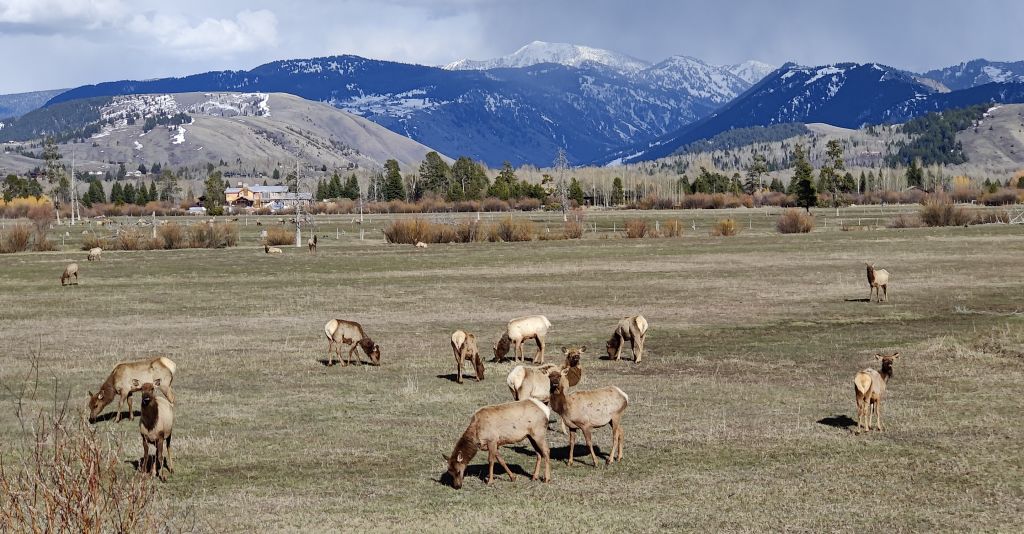
Traditional elk stopover at the Fish Creek Ranch
Observations
Despite a fitful start to spring, all the normal things seem to be taking place. Elk are moving north through the Fish Creek ranch as 399 and her cubs move south through the park. The storms of two weeks ago were difficult for birds, with uniformly snow-covered ground forcing them to the bare roadways to forage and be decimated by traffic. North of Evanston, the roads were littered with the tiny bodies of those too exhausted or unwary to avoid the hazards. On the bright side, many are passing through or taking up residence for the summer. We have been visited by the usual crew of both black-capped and mountain chickadees, red-breasted nuthatches, Oregon ("pink-sided") and slate-colored juncos, pine grosbeaks, various finches, redpolls, one hairy woodpecker, and one errant American goldfinch. Deer have been browsing the hillsides above Paintbrush Trail, so be careful there. In the valley, the osprey are sparring with the geese for nests, but we haven't seen robins or bluebirds up here yet. Watch for western tanagers in the next week or so on their way to summer nesting territory. One surprise visitor was a sharp-shinned hawk, perhaps eying the juncos as a potential meal...? There are moose prints in the woods but foraging is probably better down low. Our willows are just starting to bud.
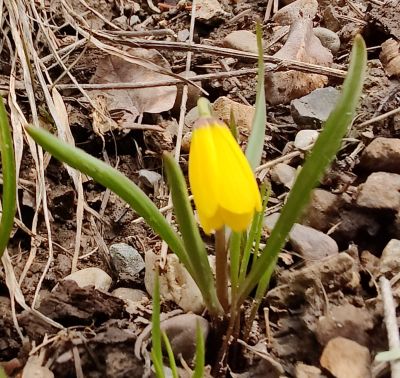
On the flower side of things, it's still pretty slow. In the past week, we saw a few fritillaries just starting to show themselves on Paintbrush trail along with a yellow violet here and there. Waterleaf shouldn't be far behind, and of course the crocuses, jonquils and buttercups will be appearing, needing just a few more sunny days to warm things up.
General Info
May 6, 7: - Eta Aquarids Meteor Shower. The Eta Aquarids is an above average shower, capable of producing up to 60 meteors per hour at its peak. Most of the activity is seen in the Southern Hemisphere. In the Northern Hemisphere, the rate can reach about 30 meteors per hour. It is produced by dust particles left behind by comet Halley, which has been observed since ancient times. The shower runs annually from April 19 to May 28. It peaks this year on the night of May 6 and the morning of the May 7. The waxing crescent moon will set early in the evening, leaving dark skies for what should be an excellent show. Best viewing will be from a dark location after midnight. Meteors will radiate from the constellation Aquarius, but can appear anywhere in the sky.
May 15: Total Eclipse of the Moon. This eclipse is visible from North America, except in northwestern regions. The Moon will enter the penumbra at 7:31 P.M. MDT on May 15 (6:31 P.M. PDT) and leave it at 12:52 A.M. MDT on May 16 (11:52 P.M. PDT on May 15).
June 14: Full Moon, Supermoon. The Moon will be located on the opposite side of the Earth as the Sun and its face will be will be fully illuminated. This phase occurs at 5:52 PM MDT. This full moon was known by early Native American tribes as the Strawberry Moon because it signaled the time of year to gather ripening fruit. It also coincides with the peak of the strawberry harvesting season. This moon has also been known as the Rose Moon and the Honey Moon. This is also the first of three supermoons for 2022. The Moon will be near its closest approach to the Earth and may look slightly larger and brighter than usual.
There will be six more full moons in 2022, according to The Old Farmers' Almanac:
- July 13: Buck moon
- August 11: Sturgeon moon
- September 10: Harvest moon
- October 9: Hunter's moon
- November 8: Beaver moon
- December 7: Cold moon
These are the popularized names associated with the monthly full moons, but the significance of each one may vary across Native American tribes.
June 21: June Solstice. The June solstice occurs at 03:05 AM MDT. The North Pole of the earth will be tilted toward the Sun, which will have reached its northernmost position in the sky and will be directly over the Tropic of Cancer at 23.44 degrees north latitude. This is the first day of summer (summer solstice) in the Northern Hemisphere and the first day of winter (winter solstice) in the Southern Hemisphere.
Opening Dates and Information: Here are links to parks, airport and JHMR pages with all the information:
Yellowstone Opening Dates
Grand Teton Information
Jackson Hole Airport
Jackson Hole Mountain Resort
Yellowstone Opening Dates
Grand Teton Information
Jackson Hole Airport
Jackson Hole Mountain Resort